
 PreviewPreview unavailable
First electrical test (continuity)
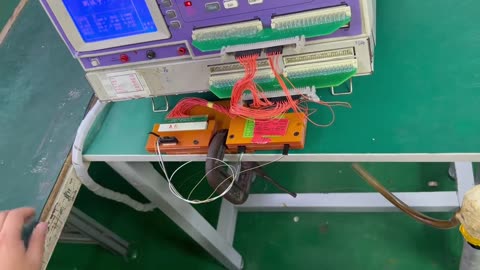
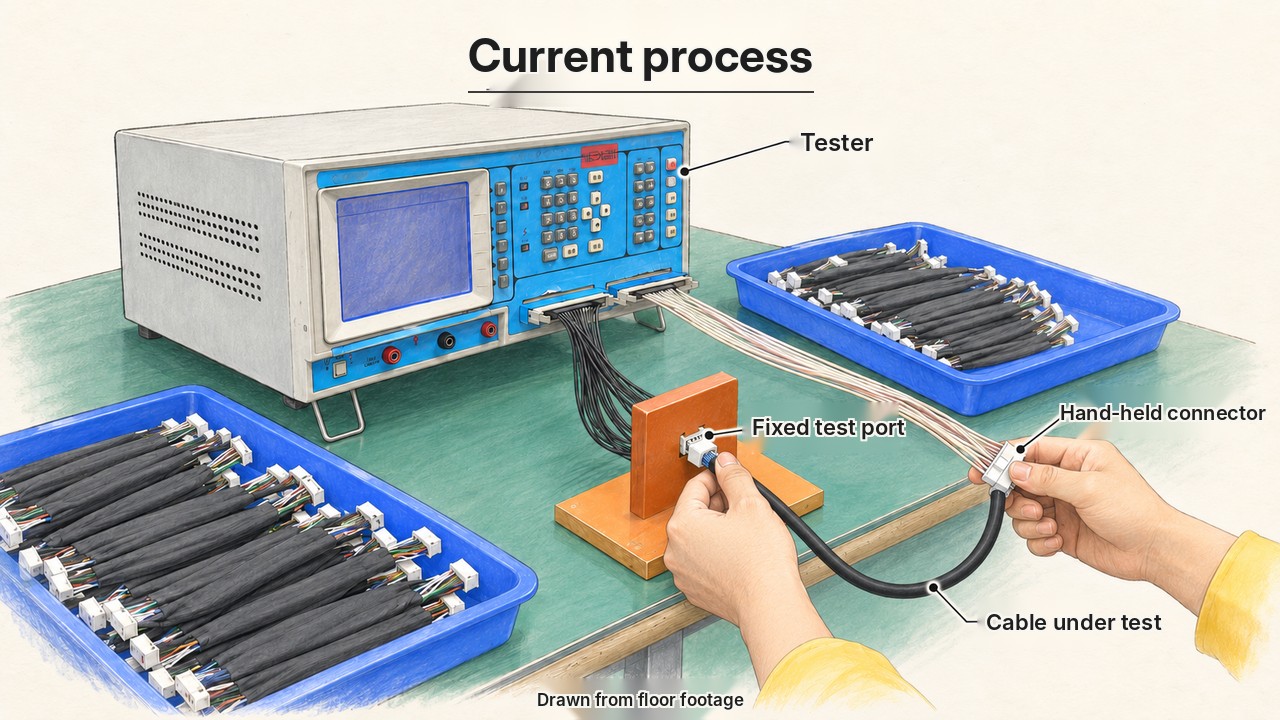
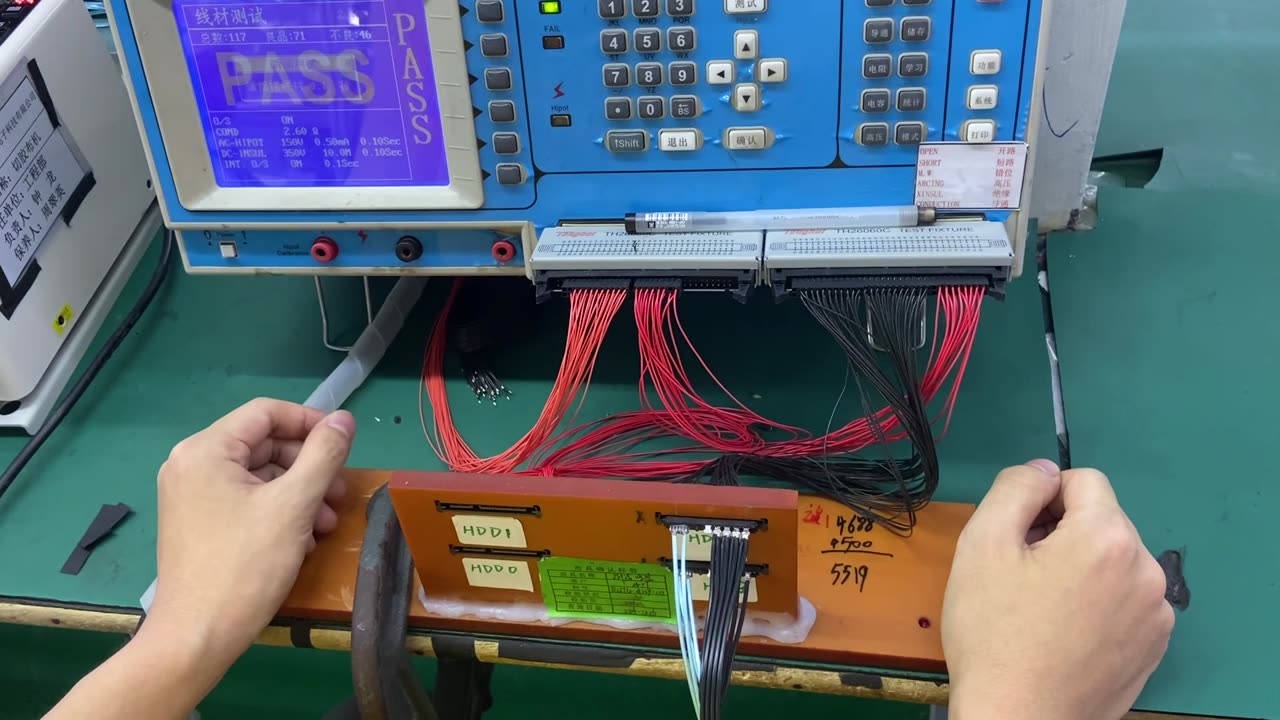
Operator plugs harness connectors into the tester fixture adapters, runs the continuity/electrical test, and unplugs the unit after pass indication
OFRI opens working factory floors to robotics researchers and embodied-AI teams. Cable and wire-harness assembly is the first site, hosted by Lianbang: real parts, real fixtures, real pass-fail criteria, and the people who know how the job is done.
Open to the robotics community. Not open data by default.
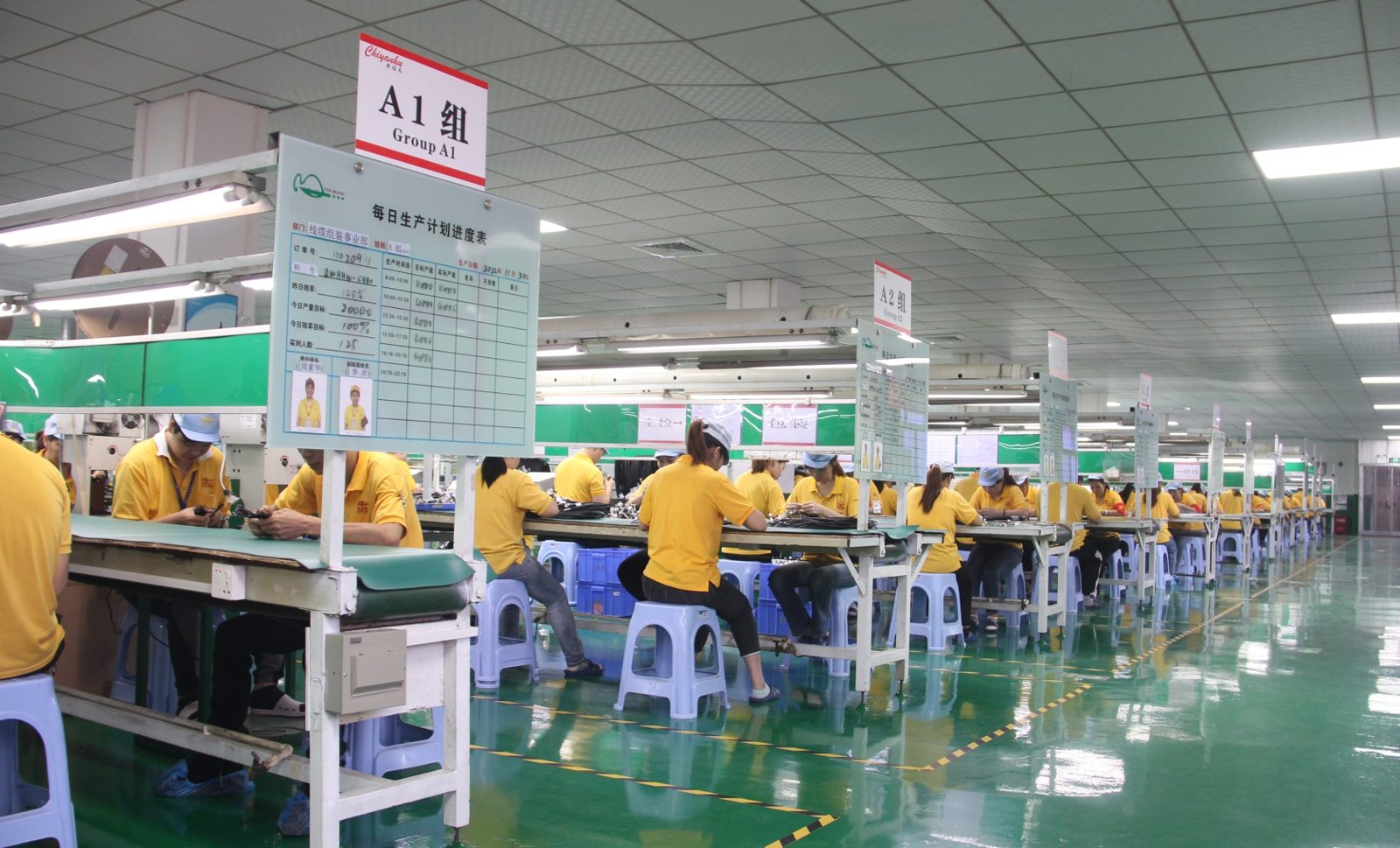
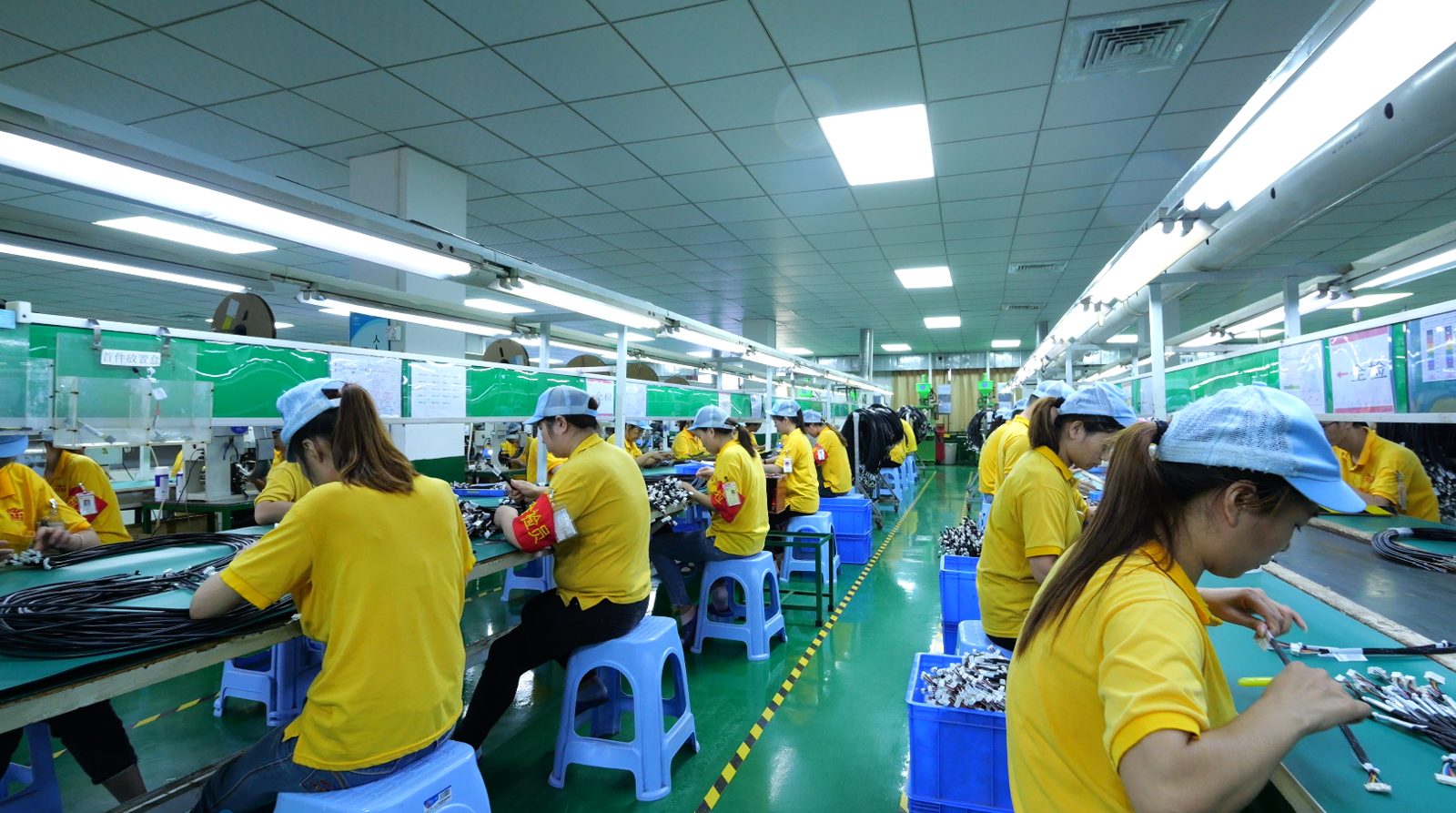
The work looks repetitive. It needs skilled hands: limp wires, tiny terminals, feel and judgment at every step. Research teams have the models and the robots. Host factories have the floor, the parts and the people who know the job. This initiative connects the two.
The factory brings the tasks.
You bring the robotics.
Let's build what's next.
Picked from the Site 01 catalog for how directly they map to open problems in manipulation. Hover or tap a thumbnail to watch the real operator.
PreviewPreview unavailableOperator plugs harness connectors into the tester fixture adapters, runs the continuity/electrical test, and unplugs the unit after pass indication
Every connector of the harness is mated into the test fixture, the continuity test runs, then everything is unmated. The same motion a technician makes at a server rack: align, insert, confirm seating, release.
See CBL-TEST-001 in the catalog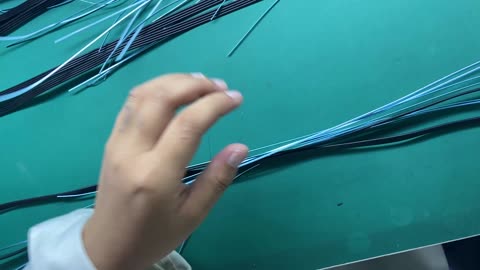 PreviewPreview unavailable
Operator inserts crimped-terminal wires one by one into the correct cavities of a connector housing until they latch, or threads a housing/boot onto the prepared cable end
Crimped terminals go into the right cavity of a small housing, in sequence, until each one clicks. Sub-millimeter targets, a limp lead behind the part, and a tactile end stop that humans feel and robots must learn.
See CBL-ASSY-002 in the catalog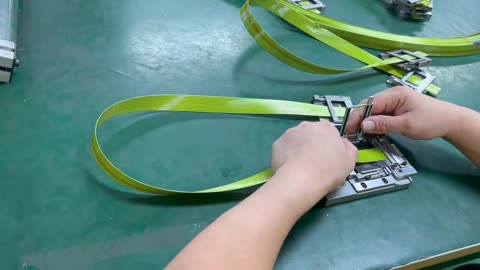 PreviewPreview unavailable
Operator arranges individual fine conductors into the slots of a metal comb/alignment fixture, by fingertip and with tweezers, preparing them for the next termination step
Long, limp cables are laid into a comb fixture in a fixed order and dressed straight. Nothing holds its shape between grasps, which is why this resists classical fixturing and draws learning-based manipulation research.
See CBL-ASSY-001 in the catalog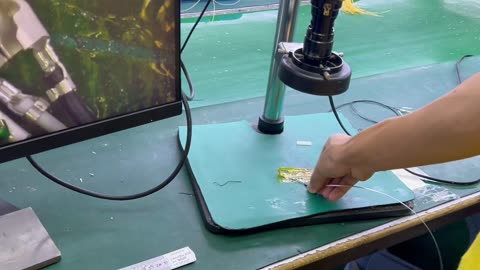 PreviewPreview unavailable
Operator inspects crimped terminals for crimp quality and seating, under a bench CCD camera with monitor or with a handheld lighted magnifier
A crimped terminal is held under the camera, turned to show each face, and judged. Pose control of a tiny part in front of a sensor, plus the judgment itself, with real OK and NG samples on the bench.
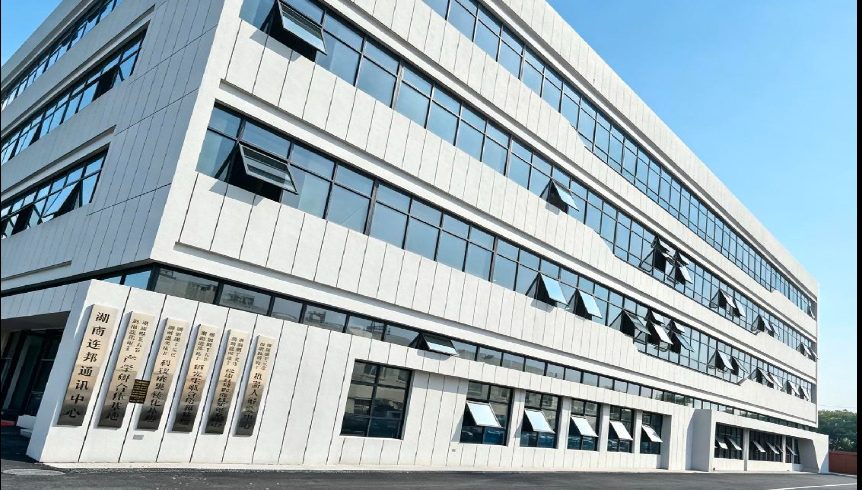
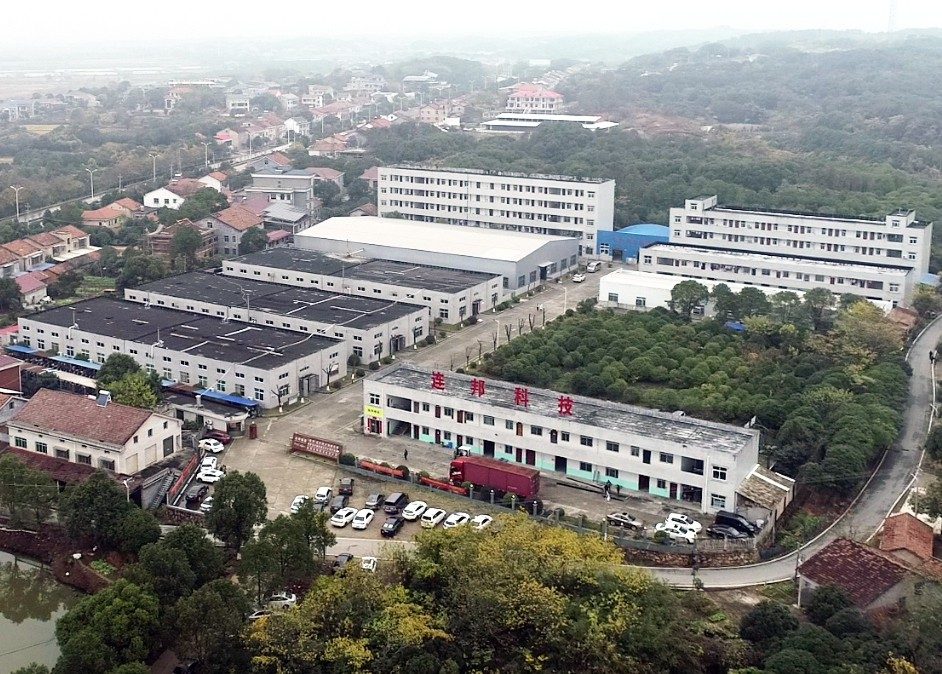
See CBL-INSP-004 in the catalogLianbang initiated the project and runs Site 01. Research teams and companies join per project. Findings are published together.
Cable and wire-harness assembly, 37 tasks live. Stamping, injection molding, CNC and SMT planned.
About the host site · LinkedInHardware testing, an automation pilot and data partnerships on the Site 01 floor. More teams in stealth.
See collaborationsGlobal Business & Strategy Director at Lianbang, AI hardware and robotics angel investor. Reads every proposal.
LinkedInLianbang initiated OFRI and runs its first site: the floor, the parts, the engineers and the lab. Other factories are invited to host the next ones.
The next generation of robotics will be shaped by the real challenges of manufacturing: real tasks, real parts, and real standards of quality.
Our vision is to help robots move beyond the lab and into factories like these, making useful, reliable automation possible across thousands of manufacturing floors.
Founded in 1995, Lianbang Electronics makes wire harnesses, precision connectors and electronic assemblies from design to production, from custom harnesses to high-speed copper interconnects for data centers, with more than 2,000 people on its production floors. The group's own lines cover bare wire and copper drawing, cable forming, stamping, injection molding and tooling, CNC and EDM, 3D printing, SMT and final assembly.
Lab and test capability is listed with the Golden Standard's lab results layer. See the lab
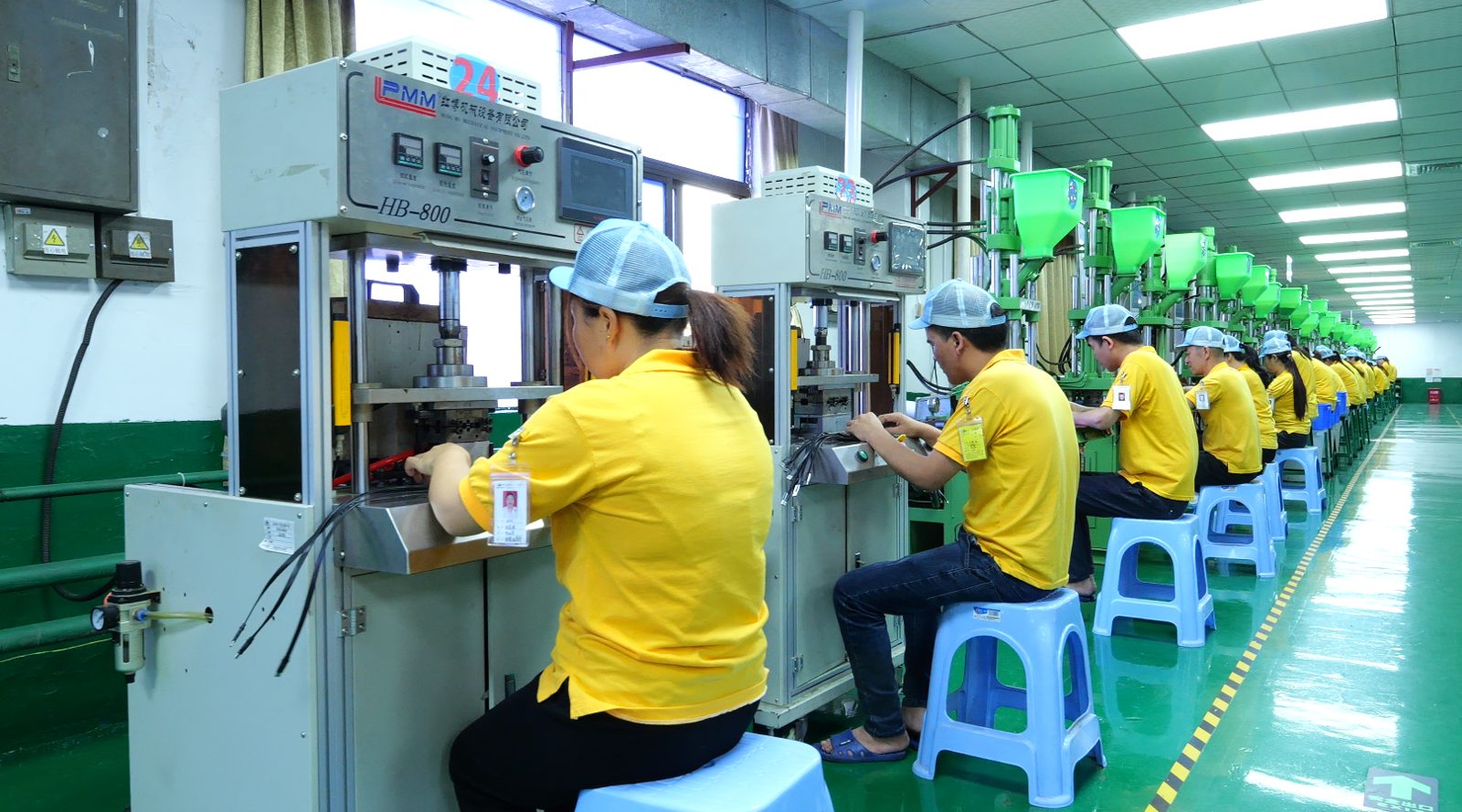
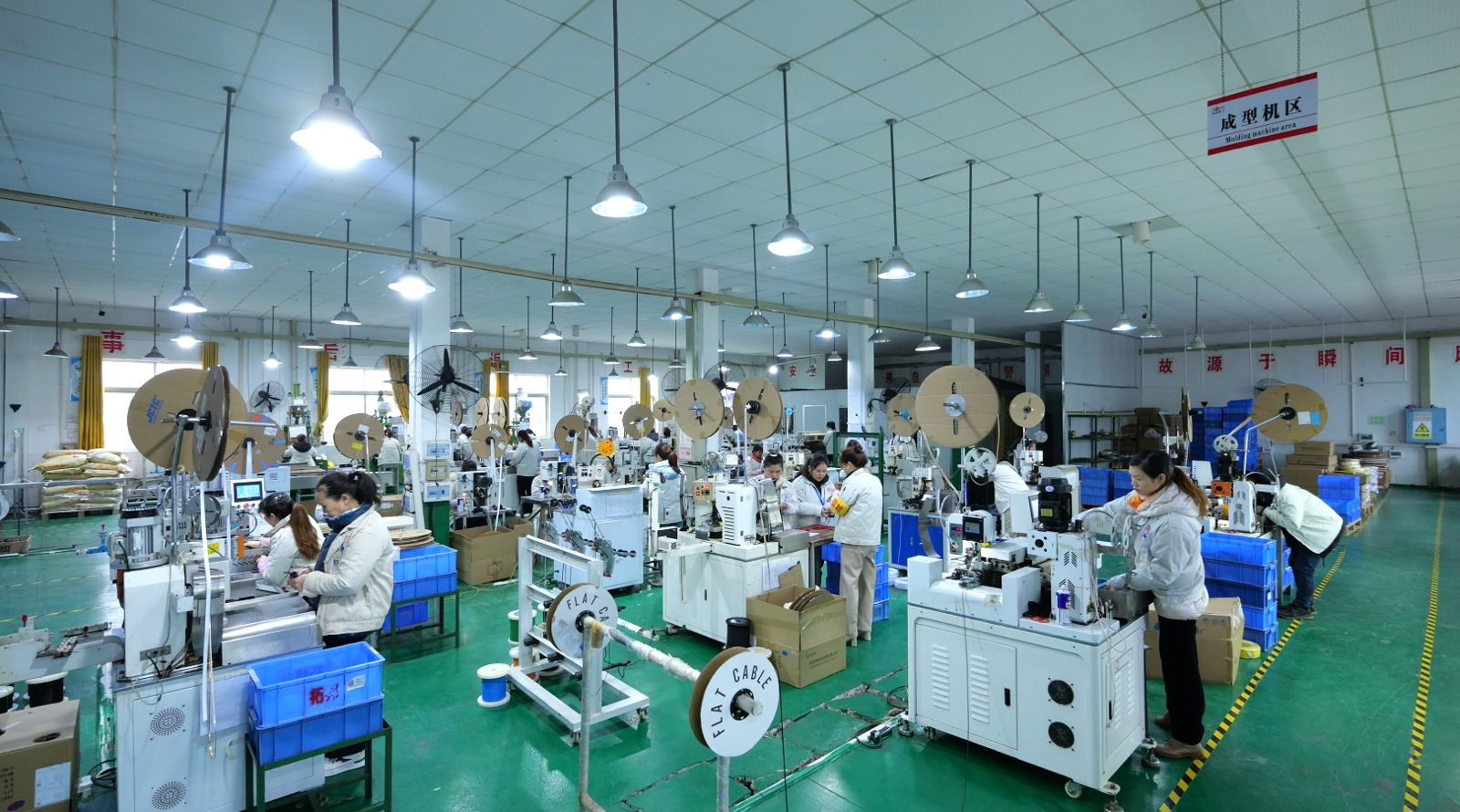
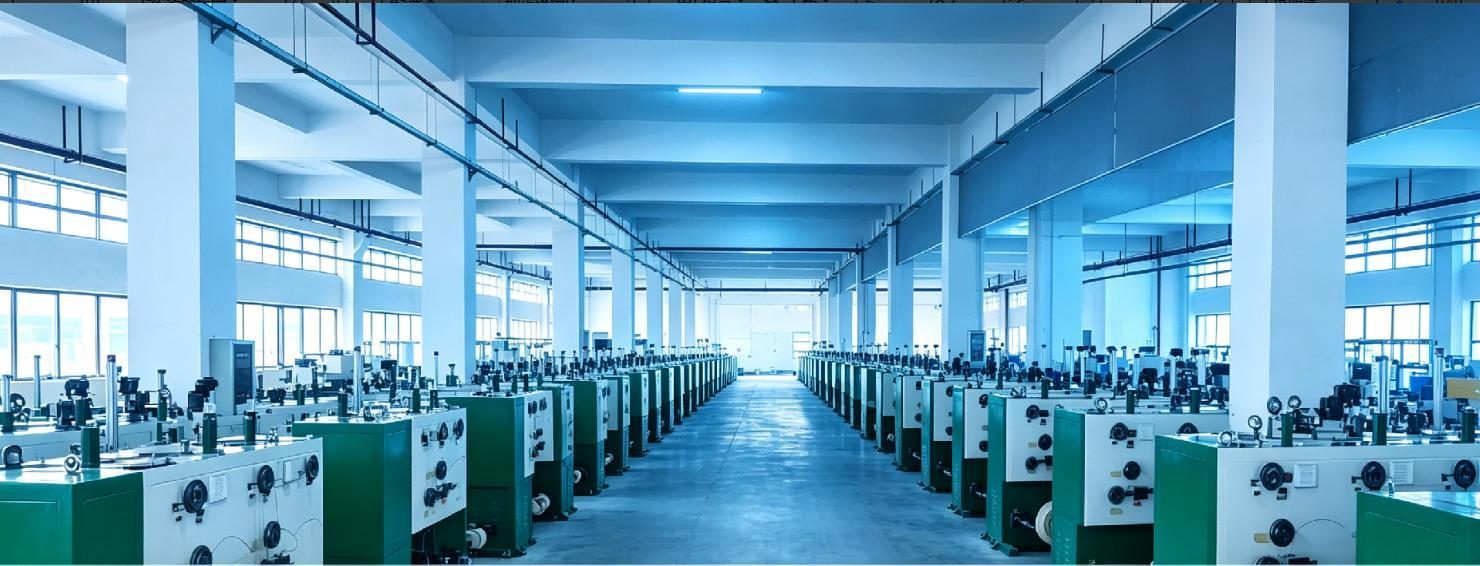
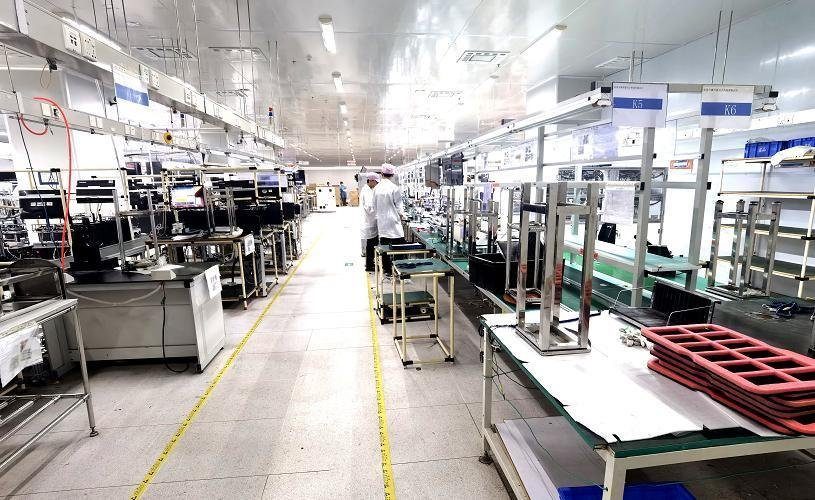
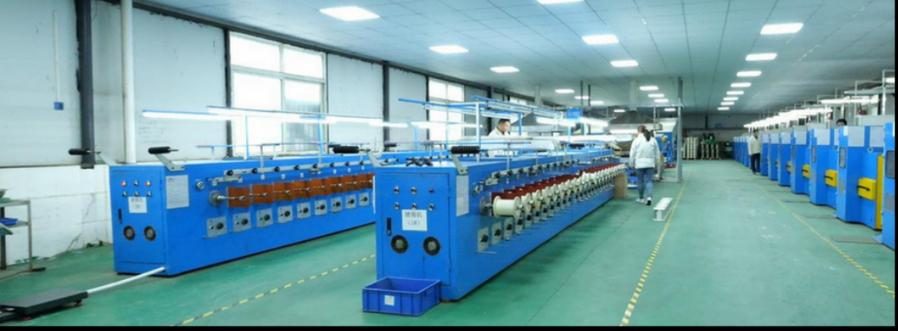
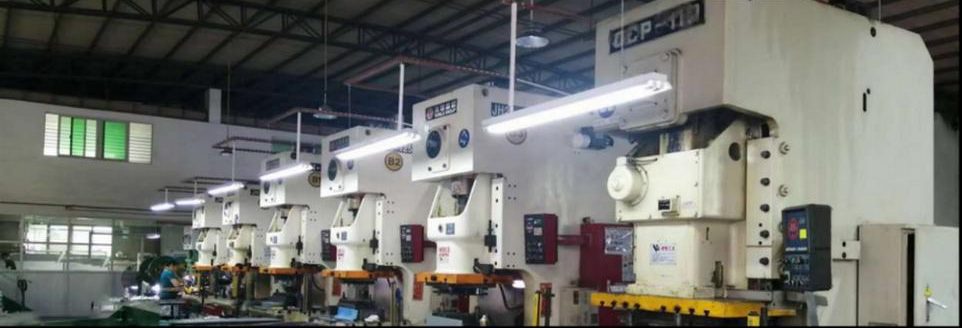
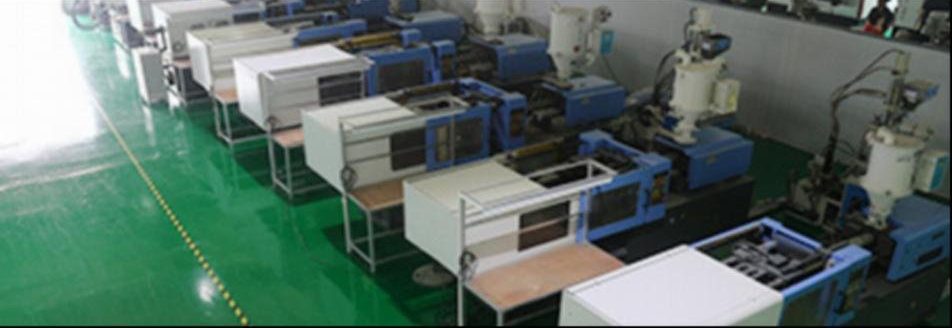
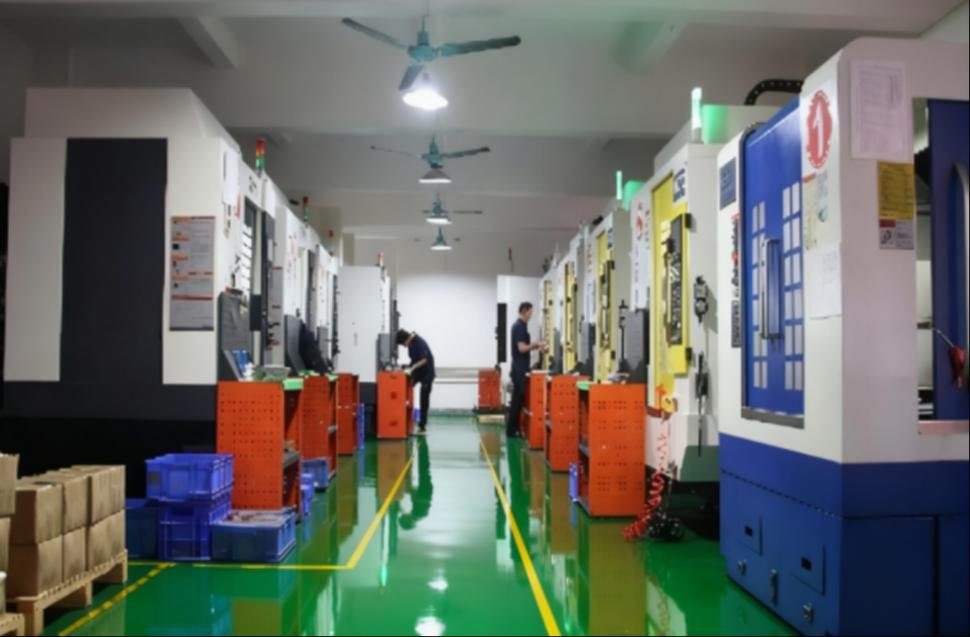
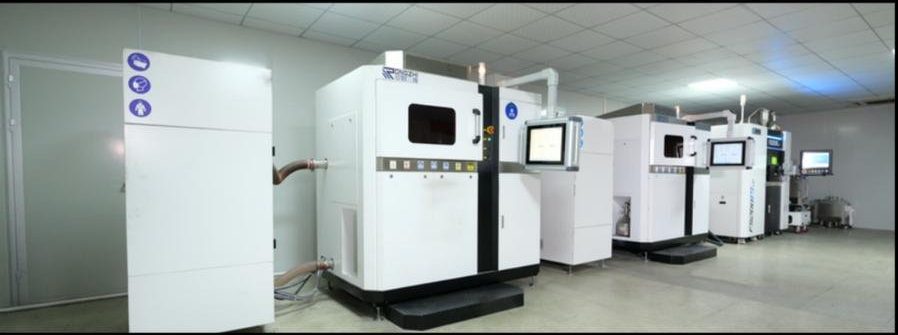
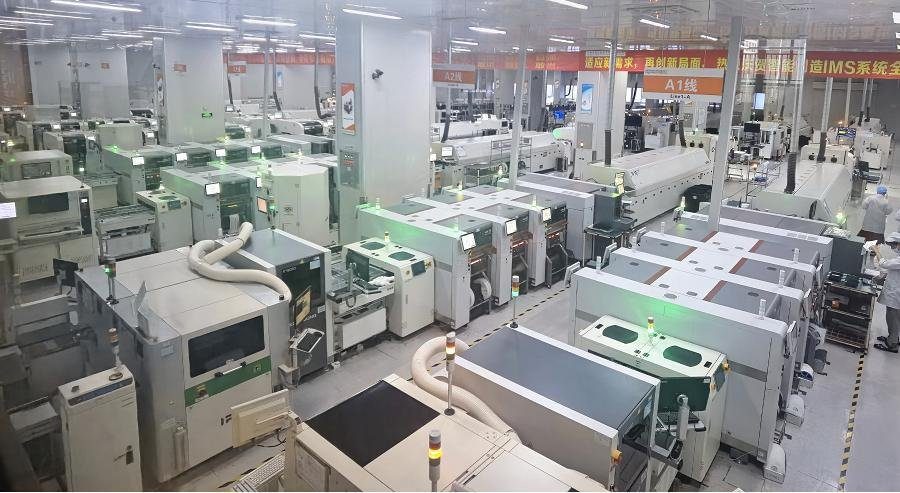
Real manufacturing processes, captured on a live floor and tagged with the manipulation skills they need. Site 01: Lianbang cable and wire-harness assembly.
Every operation on a cable and wire-harness line, captured on the Site 01 floor and tagged with the skills it needs. Hover, tap, or press Enter on a thumbnail for a short silent preview. Click a skill to light up the processes that need it.
This is a growing catalog of real factory tasks, and cable manufacturing is where it starts. The host, Lianbang, is an industrial group whose other lines run precision stamping, injection molding and tooling, CNC and EDM machining, 3D printing, SMT and electronics assembly, for customers including Bambu Lab, Dell, NVIDIA and Dyson. Tasks from those lines are planned next, both design data such as CAD and PCB files and the assembly processes themselves, as they are documented and cleared for sharing. Other factories are welcome to host a site.
Click a skill to highlight its processes below. Click again to clear.
Cutting, stripping, dressing and marking cable ends before termination.
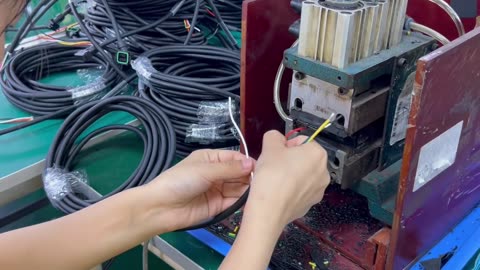 PreviewPreview unavailable
Operator feeds the cable end into a pneumatic stripping machine to a set depth; the machine cuts and pulls off the outer jacket
Ask about this task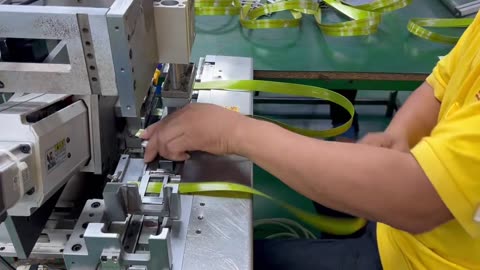 PreviewPreview unavailable
Operator feeds the flat ribbon cable end into a stripping machine that removes insulation from the core conductors
Ask about this task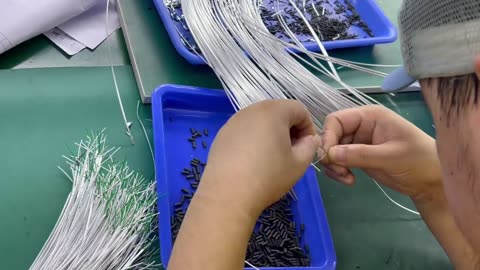 PreviewPreview unavailable
Operator peels the aluminum foil shield off fine shielded wires by fingertip and discards foil scrap into a tray
Ask about this task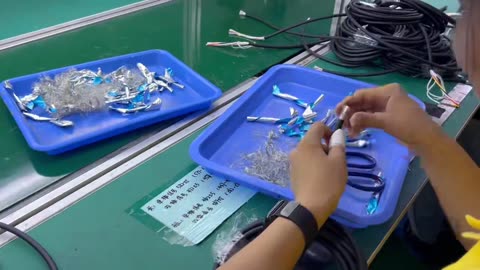 PreviewPreview unavailable
Operator removes shield wrap from the cable end, separates and arranges the core conductors, and discards scrap into trays
Ask about this task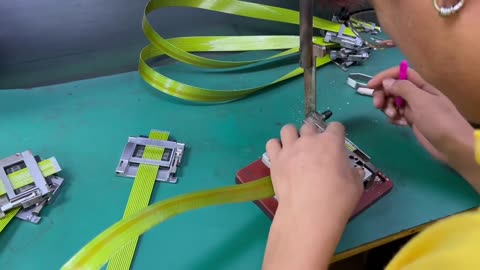 PreviewPreview unavailable
Operator seats the flat cable end in a clamping fixture against a length gauge and trims it to exact length with a hand tool
Ask about this task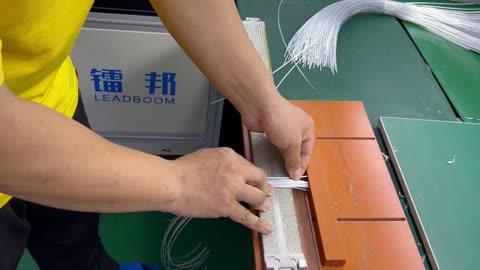 PreviewPreview unavailable
Operator aligns a batch of fine wires on the fixture bar of a laser marking machine, runs the marking cycle, and unloads the marked batch
Ask about this taskPressing terminals, contacts and conductors with reel-fed and single-station presses.
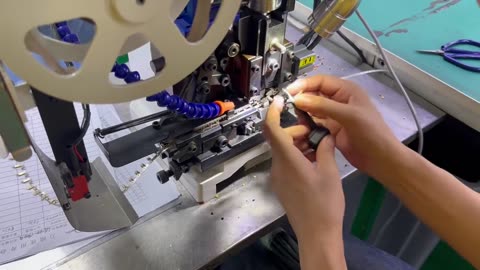 PreviewPreview unavailable
Operator positions the stripped wire end into the crimp applicator of a reel-fed crimping press and actuates the press to crimp the terminal
Ask about this task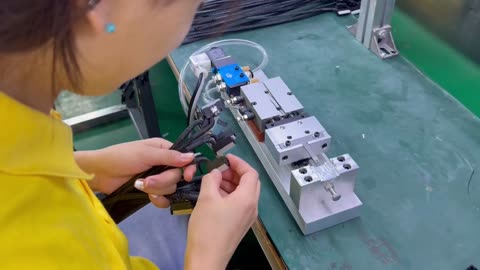 PreviewPreview unavailable
Operator places the cable-connector assembly into a pneumatic press fixture that stamps/seats the spring contacts, then removes the unit
Ask about this task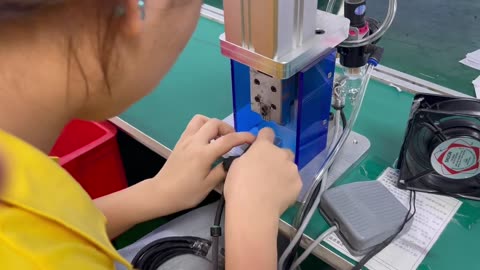 PreviewPreview unavailable
Operator holds the connector under a small pneumatic press that pushes terminals fully home into the housing, then verifies seating
Ask about this task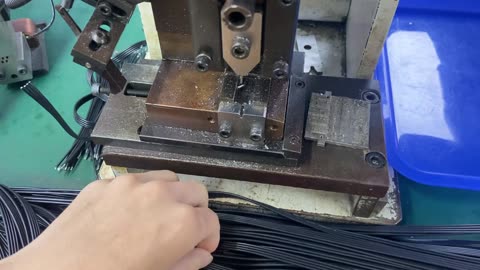 PreviewPreview unavailable
Operator pairs the stripped conductor ends of flat 2-core cables, inserts them into the press die, and actuates the machine to rivet/compact them
Ask about this taskRouting, threading and seating wires into housings, sleeves and fixtures.
PreviewPreview unavailableOperator arranges individual fine conductors into the slots of a metal comb/alignment fixture, by fingertip and with tweezers, preparing them for the next termination step
Ask about this taskPreviewPreview unavailableOperator inserts crimped-terminal wires one by one into the correct cavities of a connector housing until they latch, or threads a housing/boot onto the prepared cable end
Ask about this task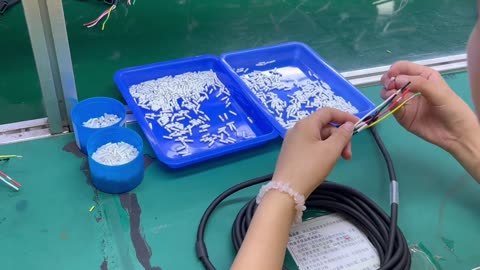 PreviewPreview unavailable
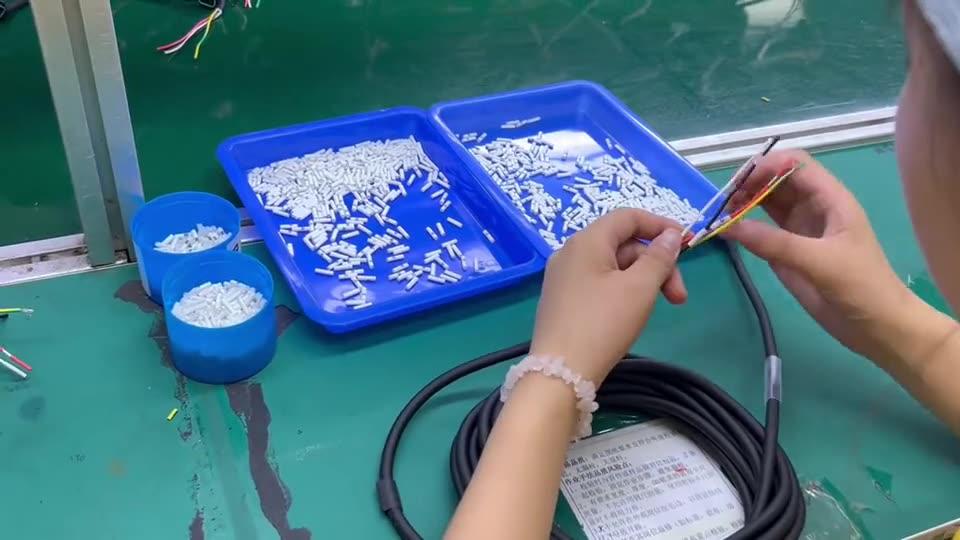
Operator picks tiny printed marker tubes from trays and threads them onto the matching individual conductors of a multi-core cable
Ask about this task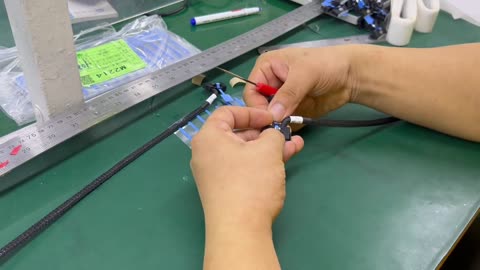 PreviewPreview unavailable
Operator attaches small pull-ring parts onto miniature connectors along a slim cable, seating each ring with fingertips and a hand tool
Ask about this task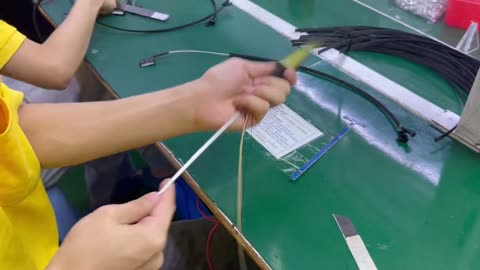 PreviewPreview unavailable
Operator uses a needle/leader tool to pull thin wires through the bore of a braided sleeve along its full length
Ask about this task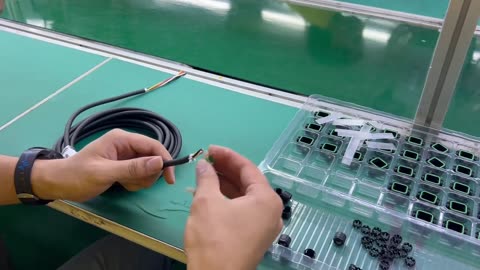 PreviewPreview unavailable
Operator picks small molded components (boots/ferrites/grommets) from trays and slides them onto the cable end in sequence
Ask about this task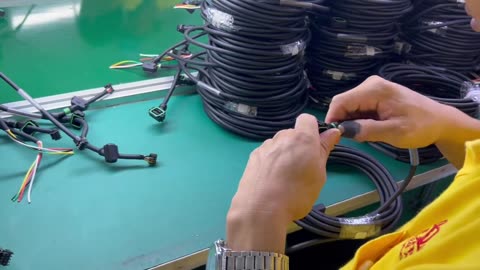 PreviewPreview unavailable
Operator fits molded connector housing and strain-relief parts onto the terminated cable end and seats them together by hand
Ask about this task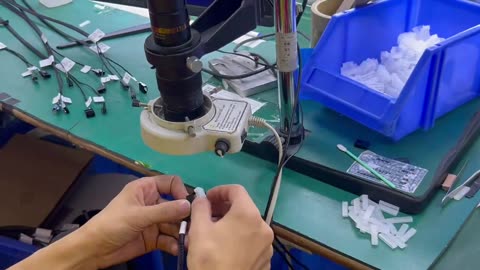 PreviewPreview unavailable
Operator picks soft protective sleeves from a bin and installs them over connector ends at a powered sleeve-fitting station
Ask about this task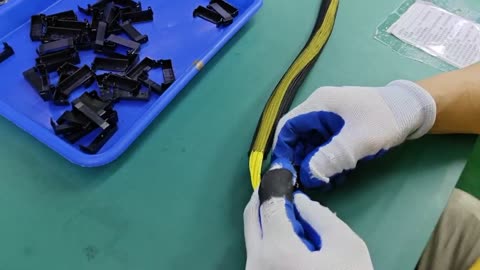 PreviewPreview unavailable
Gloved operator clips plastic shell/clamp parts onto the harness at specified positions until each snaps closed
Ask about this taskHot-bar joining of flat cable and solder-pot tinning of wire ends.
 PreviewPreview unavailable
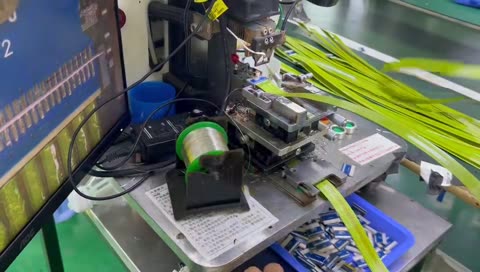
Operator aligns flat ribbon cable conductors in a hot-bar soldering machine and solders them to the terminal row, monitoring a magnified live view on screen
Ask about this task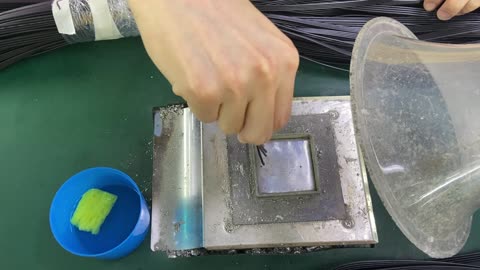 PreviewPreview unavailable
Operator dips a fanned batch of stripped wire ends into a molten solder pot for a controlled time and depth, then withdraws and sets them aside
Ask about this taskTaping, sleeving, dispensing, forming and labeling the built harness.
 PreviewPreview unavailable
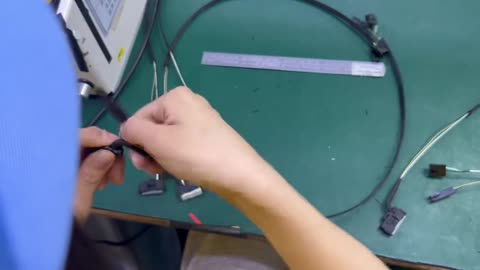
Operator wraps adhesive cloth tape around the P1 breakout point of a harness, rotating the cable bundle while maintaining tape tension and overlap
Ask about this task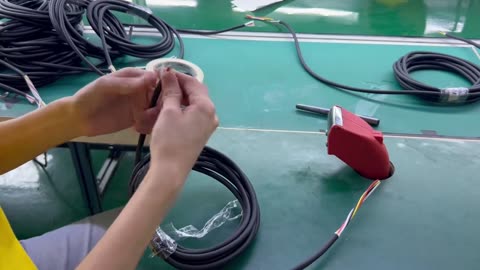 PreviewPreview unavailable
Operator separates and trims the filler/strength yarn at a prepared cable end flush with the jacket using a hand cutter
Ask about this task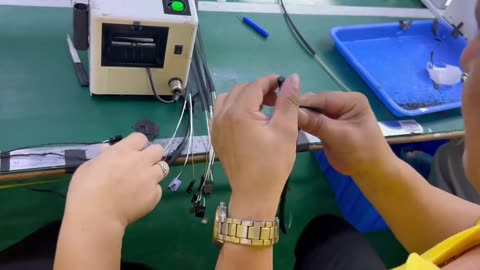 PreviewPreview unavailable
Operator works the braided mesh sleeve back over the cable end by hand, dressing it evenly before subsequent termination
Ask about this task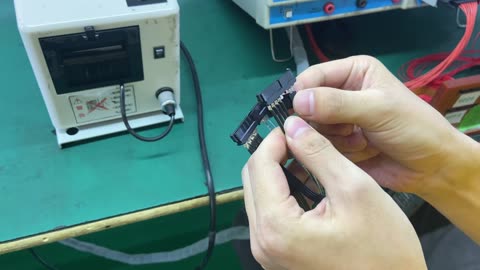 PreviewPreview unavailable
Operator wraps short pieces of adhesive tape around wires, connector tails, or harness bundles at specified positions, in some variants measuring positions against a bench-mounted rule
Ask about this task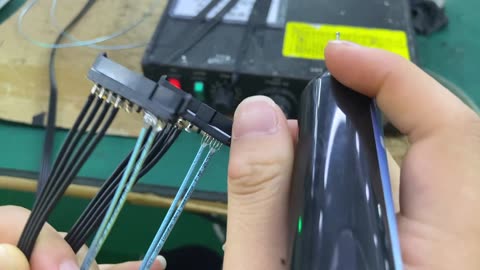 PreviewPreview unavailable
Operator applies adhesive from a squeeze bottle onto each wire-terminal junction at the connector rear for strain relief/insulation
Ask about this task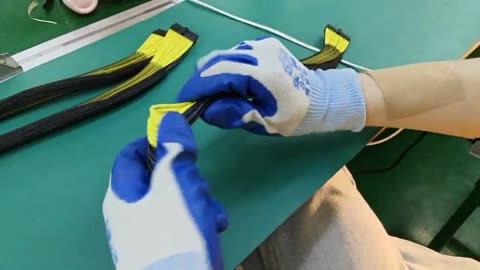 PreviewPreview unavailable
Gloved operator bends the finished harness bundle into its specified routing shape and verifies bend positions against a steel rule
Ask about this task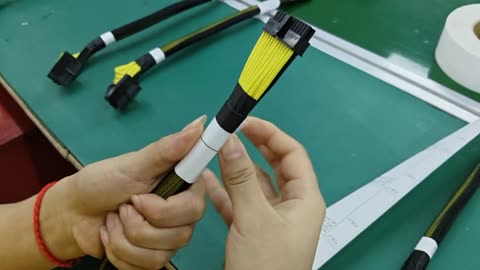 PreviewPreview unavailable
Operator peels labels from the release liner and applies them to the cable: large wrap-around labels, small wrap labels on braid, or micro flag labels on fine wires
Ask about this taskConnecting the harness to the test fixture and running the first electrical check.
PreviewPreview unavailableOperator plugs harness connectors into the tester fixture adapters, runs the continuity/electrical test, and unplugs the unit after pass indication
Ask about this taskVisual, magnified and dimensional checks before release.
 Preview pendingPreview unavailable
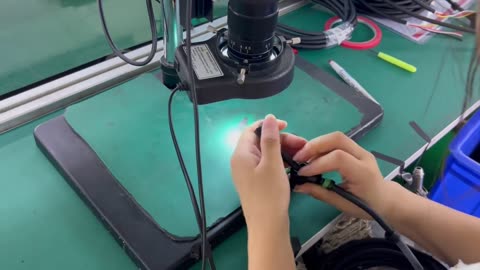
Operator positions the connector or termination end under a bench CCD camera and inspects the magnified image for defects, reorienting the part as needed
Ask about this task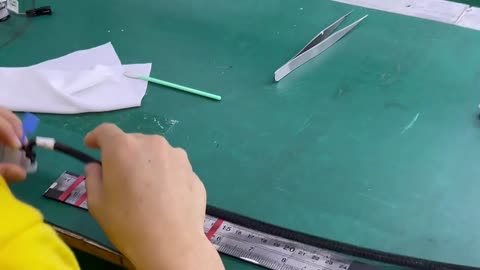 PreviewPreview unavailable
Operator visually inspects the finished cable over its full length and connectors, wiping surfaces with alcohol cloth and cleaning swab before release
Ask about this task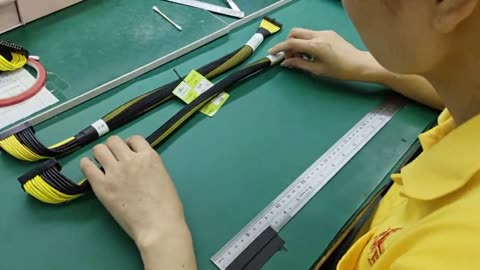 PreviewPreview unavailable
Operator lays the finished harness along a steel rule on the bench and verifies overall and branch lengths against specification
Ask about this taskPreviewPreview unavailableOperator inspects crimped terminals for crimp quality and seating, under a bench CCD camera with monitor or with a handheld lighted magnifier
Ask about this task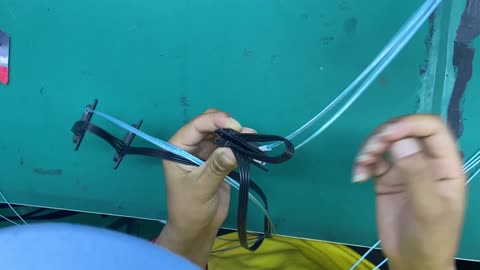 PreviewPreview unavailable
Operator visually checks a molded assembly with multiple fine transparent wires/tubes, untangling and dressing them into order
Ask about this taskProtecting, boxing and barcode-tracing finished assemblies.
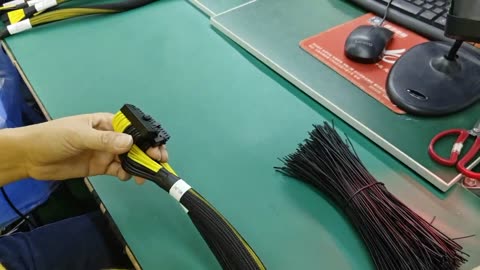 PreviewPreview unavailable
Operator wraps each connector head of the finished harness in bubble film for protection before boxing
Ask about this task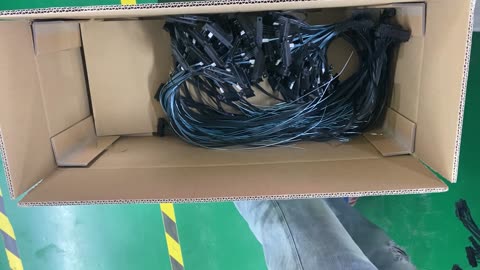 PreviewPreview unavailable
Operator places batches of coiled, tied cable assemblies into a shipping carton, arranging them to fill the box evenly
Ask about this task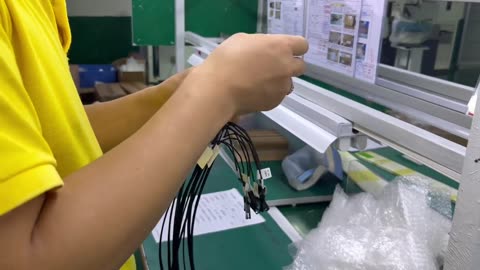 PreviewPreview unavailable
Operator scans unit barcodes into the station computer, attaches traceability labels to the harness, and preps connector heads with bubble wrap
Ask about this taskSite 01 builds high-speed copper cables that end up in data centers. Mating their connectors, verifying the link and inspecting the result is daily work on that floor. A rack technician and the test operator make the same motions.
Tap to play
CBL-TEST-001 · Mate every connector into the fixture, run continuity, unmate
What the bench and the rack share
Six layers a host site can provide for a task, from the written standard to the lab result. Shown with the Lianbang cable site; scope is agreed per project.
A video shows how a person does the job. To train and verify a robot you also need what should happen, what the parts are, and whether the result passed. A host site can chain all six layers for a task; shown here with the Lianbang cable site. The scope and level of detail depend on the requirements of each project. Pick a layer.
Shown for Site 01. Items marked "today" exist now. The rest are arranged per project and need the site's approval.
Working lines in China and Vietnam for data collection, validation and, where it earns its place, deployment.
The actual cables, harnesses, connectors, terminals and sleeving in these videos, as samples for qualified projects.
Thirty years of process know-how, fixtures and tooling, and engineers who can explain why a step is done the way it is.
Experienced operators performing the real tasks, captured to your spec under agreed conditions.
In-line and lab test equipment. Measurement data and pass-fail feedback where available and approved.
For robotics that shows practical promise: a pilot cell on a live line, joint development, a path to industrial deployment.
Site 01 keeps an in-house lab that decides pass or fail. Pick a category to see the tests.
In-house lab behind the Golden Standard's lab results layer. Pick a category.
Who the initiative wants to work with, how collaboration works, who is already on the floor, and where to send a proposal or a suggestion.
Frontier labs and universities, and teams working on the technical directions below. Pick yours to see where you plug in.
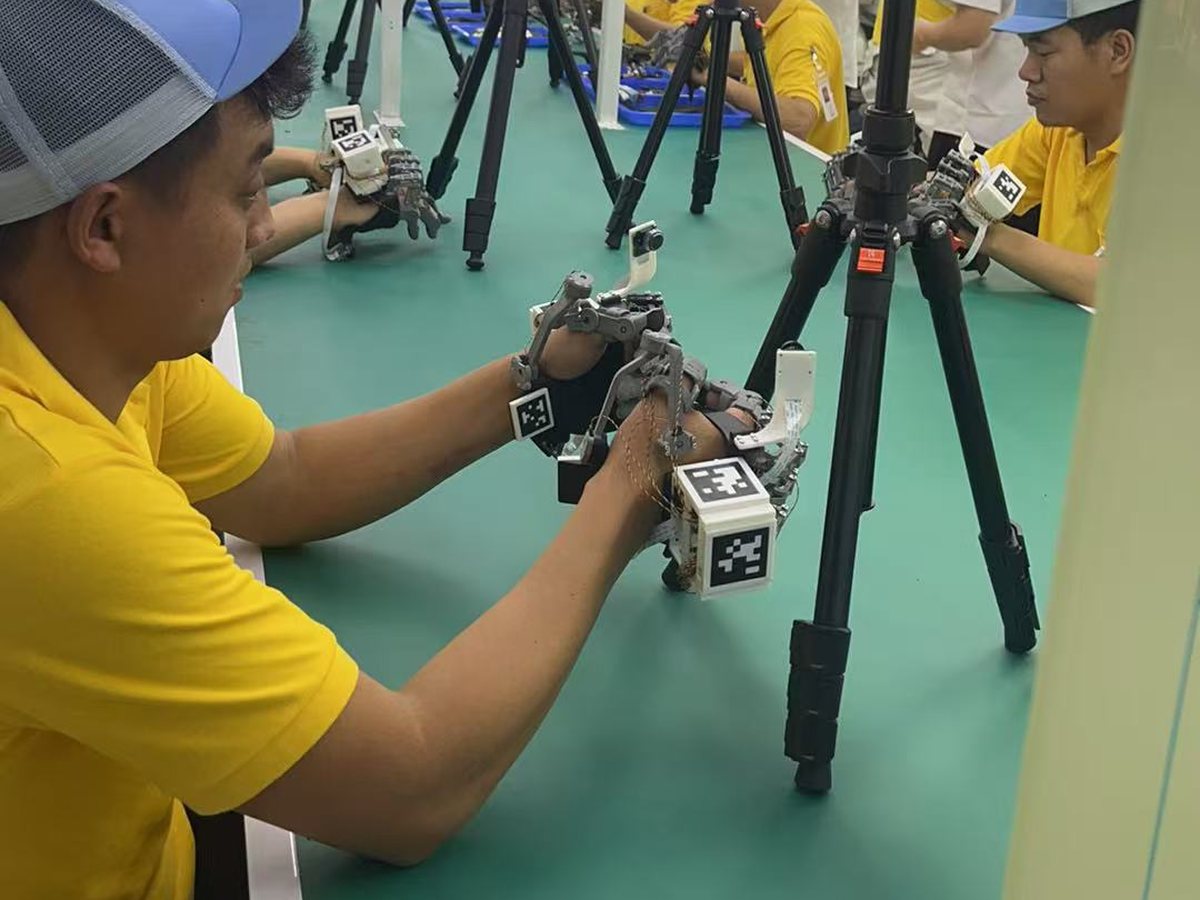
Bringing human dexterity to robots.
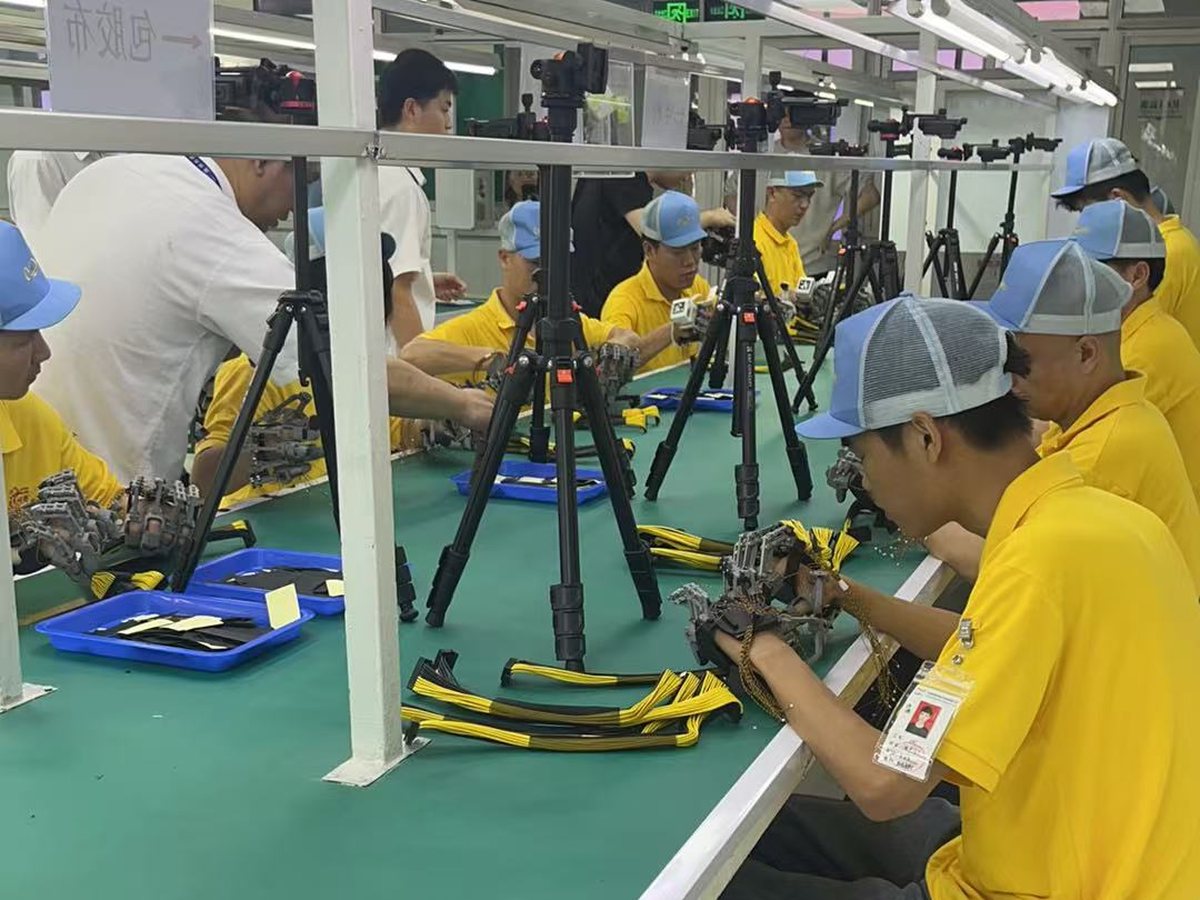
Operators on our harness line wore Origami's exoskeleton data-capture gloves through real production tasks, with tripod cameras recording each station. Lianbang engineers returned structured feedback on fit, durability, interference with the work, and what the captured data needs to be useful on a production task.
The open-source framework for agentic robotics. "Program atoms, not bits."
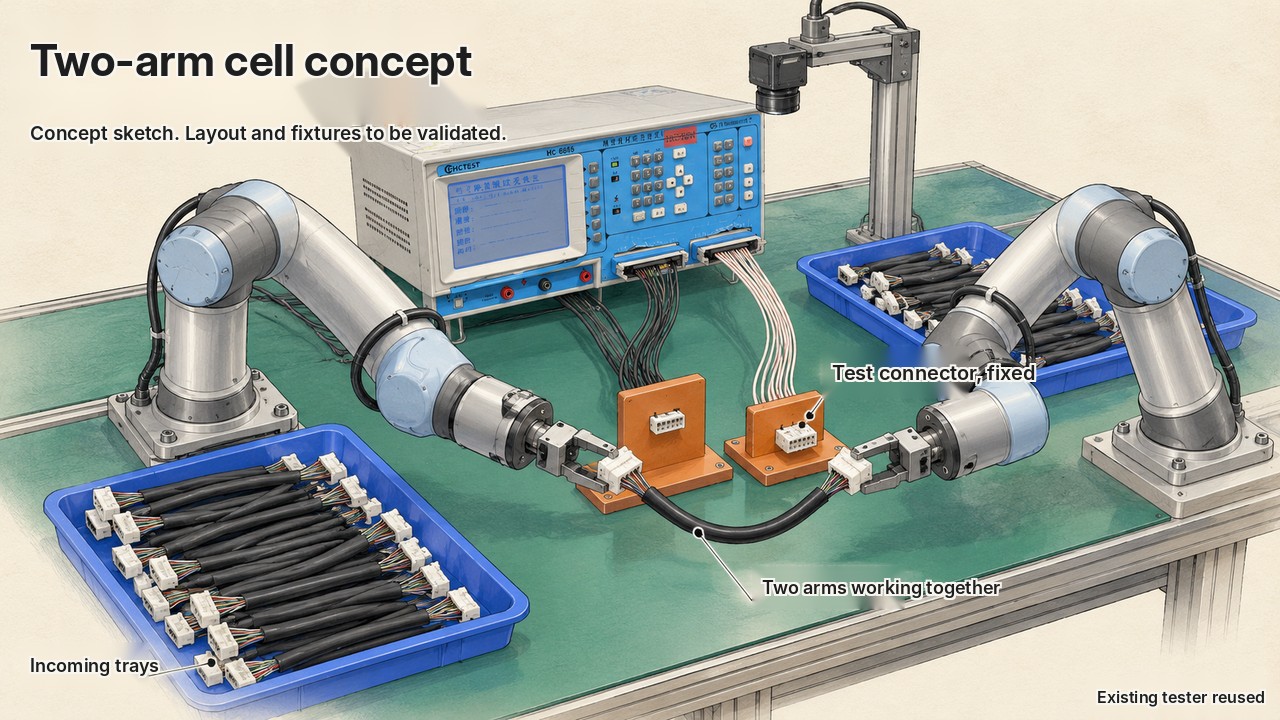
A feasibility study on robotizing one repetitive test step on the Site 01 line, using the existing fixtures and tester and starting from a single cable type. Success is measured in production terms: labor saved, cycle time and repeatability. Currently selecting the test scenario and the sample materials.
The perception-action stack of embodied intelligence: data, models and tooling for the next billion robots.
Lianbang provides production tasks and operator demonstrations, plus engineering advice on the data-capture equipment.
Industrial data layer for robotics training. Real factory workflows captured and structured at scale, combining first-person industrial video with SOP-level process knowledge.
Lianbang contributes line access and process context.
More teams in stealth mode are running data collection and hardware tests with us. Names and scope are shared under NDA.
 YT
Runs the initiative. Global Business & Strategy Director at Lianbang · AI hardware and robotics angel investor. Reads every proposal.
The catalog and its previews are public. Full clips, multi-view captures and task definitions under a data agreement with the host site.
Real cables, connectors and fixtures, plus test resources to check results against production criteria.
Technical validation in a real production environment, scoped together, the site's engineers alongside.
Findings written up together: technical reports, benchmark results and datasets, plus live demos at conferences and on the floor, credited to everyone who did the work.
Robotic automation for cable manufacturing, from pilot cell to deployment across the industry.
Every proposal is read. Priority goes to:
hello@openfactoryrobotics.orgTell us what's missing. Is there a cable task you'd like to see, data you need for an experiment, or a question you'd like to discuss with the production engineers or designers?
Why a thirty-year-old cable factory opened its floor to the robotics community, and why this initiative exists. Five short chapters.
Part of cable manufacturing automates well. The high-value, custom part, the kind that ends up in data centers, still runs on hands.
A cable never takes the same shape twice. Terminals are a few millimeters across. A good fit is judged by feel and by eye.
 Tap to play
CBL-ASSY-003 · Threading wire marker tubes: the right tube, the right wire, in order
Each of these needs precise positioning, a tactile confirmation and a quality judgment at the end. Watch one a hundred times and the difficulty shows: nothing about the object holds its shape between grasps, and every variant of a harness changes the sequence.
We want to find out which of these tasks a robot can take over, one at a time, so that production becomes steadier and people's hands are freed for the work that still needs them.
Site 01 builds high-speed copper interconnects, including 800G-class cables, for data centers. These are high-value products, and the data center is where cable handling meets robotics first.
Rack figures: NVIDIA GTC 2024 keynote, as reported by SiliconANGLE and TechRadar; they apply to the GB200 NVL72 configuration, not to racks in general. Market growth: LightCounting compound annual growth estimates for DAC and AEC, as cited by NADDOD; analyst projections, not measurements.
At Site 01, operators mate every connector of a harness into a test fixture, run the electrical test and unmate it, hundreds of times a day. Real connectors, real fixtures, a PASS or FAIL for every cycle.
A data center rack is a different environment. The initiative does not operate racks or claim a rack-service robot. It offers the bench as the place to practice the shared motions: recognize, align, insert with the right force, handle the cable, hold still, confirm.
Cables are flexible objects, and that makes them hard to handle. But the actions repeat from one cable to the next.
Research direction · potential, not result
Locate, grasp, route, mate, unmate, verify: the same six actions recur across products. If flexible-cable manipulation crosses a key technical threshold, the ability learned on an ordinary data cable could carry over to high-speed cable, to automotive harnesses, and on to aerospace cable. Cables run through every industry, so one transferable breakthrough could reach a great many manufacturing settings. This initiative exists to help that turning point arrive sooner.
The question is which skills transfer when the cable, the connector or the fixture changes, and what it takes to adapt them. Host sites can help by giving researchers access to real production variation, demonstrations and measurable outcomes through joint projects.
Robot learning has moved fast. What it needs now is more real industrial settings with real variation and real pass-fail criteria.
Research teams bring the algorithms, models and platforms. Host factories bring a working floor, the materials, the fixtures, the test equipment and the people who know the job.
One more thing matters here. Today several adjacent processes are done entirely by hand, and what decides whether automation scales is whether those processes can run in sequence: one station handing off cleanly to the next, without routine human intervention between steps. That is the direction this initiative wants to push, and it is the foundation of industrial-scale deployment.
This is not about showing what robots have already done. It is about finding out what they could do next, in a real factory, with partners who want to find out too.
Checking who you are…
This page is for the site owner. Nothing here is visible to other visitors.